
The New Reality of Tech Talent Demand
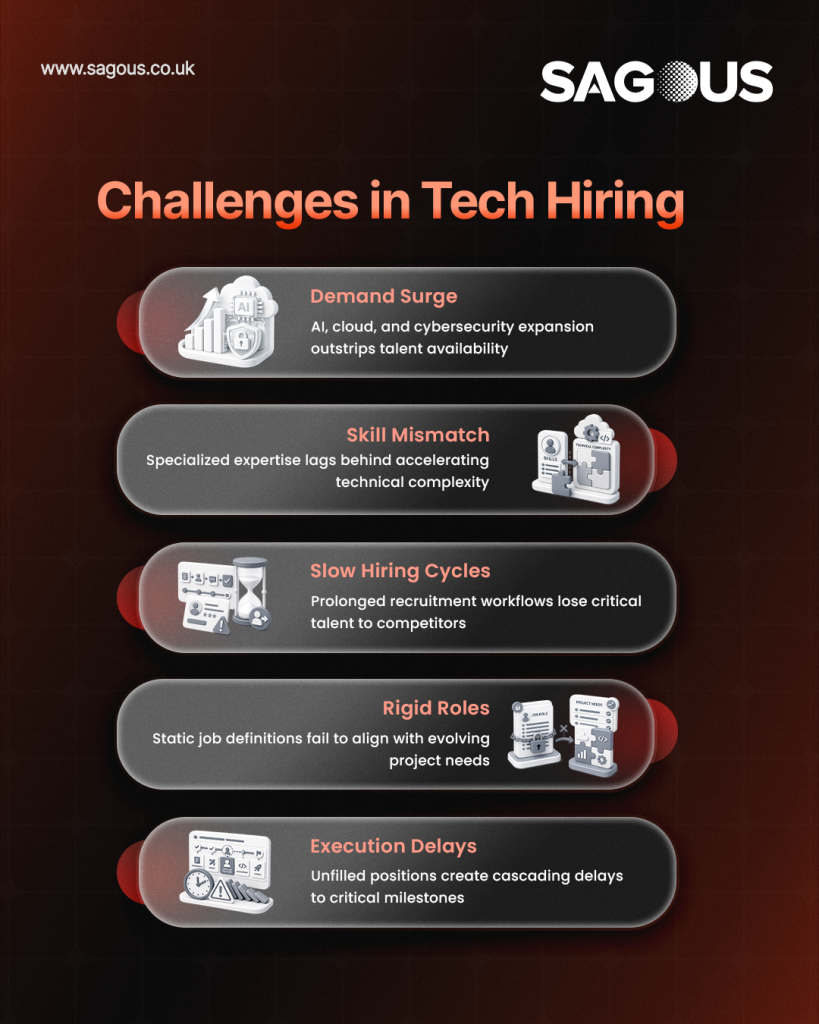
Technology investment continues to surge across AI, cloud, and cybersecurity, but access to skilled talent remains a major constraint. According to the ManpowerGroup 2025–2026 Talent Shortage Survey, over 70% of employers globally report difficulty finding skilled talent, with IT roles among the most impacted. This gap reflects a structural imbalance between demand for advanced skills and available talent, forcing organizations to rethink how they access expertise.
Rethinking Hiring for a Changing Reality
Traditional hiring is built around long-term roles, while most tech work today is project-based and time-bound. Organizations often require specialized expertise at specific stages rather than continuously, while hiring processes remain linear and struggle to stay responsive to changing expectations. By the time hiring is completed, priorities, required skills, and even the original role definition may have already shifted. This creates a growing disconnect between how companies hire and how work is actually delivered.
According to Staffing Industry Analysts, 76% of IT employers globally struggle to find the talent they need, further slowing hiring and execution. The issue is not the availability of talent. It is that the hiring model is not designed for speed, flexibility, or changing demands.
The Emergence of Fractional Expertise
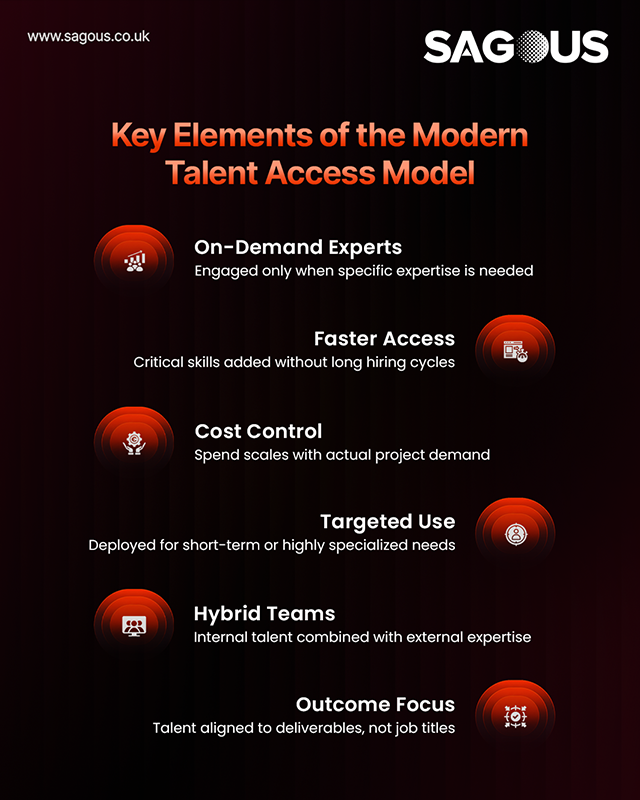
As this disconnect becomes more apparent, organizations are increasingly adopting flexible models like fractional tech talent to access specialized expertise when needed. This approach enables companies to engage experts on a part-time or project basis, bringing in critical capabilities exactly when required. With workforce structures becoming more flexible and global talent pools expanding, this model continues to gain momentum. Instead of focusing on roles, organizations are prioritizing outcomes and expertise.
From Roles to Skills: A Fundamental Shift
Amid the shift toward more flexible talent models, hiring is moving from roles to skills. Organizations are rethinking how they evaluate and access talent. According to Deloitte, 66% of managers say new hires are not fully prepared for evolving job demands, highlighting a gap between roles and real-world skills. This is driving a transition toward skill-based hiring, with a stronger focus on the capabilities required to solve specific business challenges.
Faster Access to Critical Expertise
When technology advances rapidly, delays in hiring can have a direct impact on business performance. Many teams report that key tech roles remain unfilled for extended periods, slowing innovation and execution. Fractional talent helps address this by enabling faster access to specialized expertise, reducing time-to-hire and accelerating project delivery. This is already visible in how talent is being accessed today.
Case Study: Scaling Shopify Development with Fractional Talent
In a recent case, Stamped needed to quickly expand its Shopify development capacity to support growing product demand. To address this, the company onboarded two experienced Shopify developers within four weeks through a remote talent platform. This enabled the team to maintain development momentum, improve delivery speed, and integrate external expertise seamlessly, while also achieving greater cost efficiency compared to traditional hiring approaches. More importantly, it reflects a broader shift toward accessing specialized expertise as needed, rather than building fixed roles around evolving requirements.
Source: WALTER Stamped Case Study
A More Efficient Cost Structure
The impact is not just operational, but financial. Hiring highly skilled professionals full-time involves significant long-term investment. Fractional hiring allows companies to align cost with actual demand, accessing expertise only when needed. This approach improves resource efficiency while maintaining access to high-quality talent, aligning with broader workforce trends toward flexibility.
Where Fractional Talent Fits
Fractional talent is most effective in situations where expertise is needed quickly and for a defined scope. This includes:
- Time-sensitive projects (e.g., cloud migrations, security implementations)
- Short-term capability gaps
- Specialized skills not needed full-time
Rather than replacing existing teams, fractional experts extend them, enabling organizations to respond more effectively to changing demands. No single hiring model fits every need. Instead, organizations are combining approaches to better align with how work is actually delivered.
Building Hybrid Workforce Models
This evolution is leading to the development of hybrid workforce structures. Organizations are combining:
- Core in-house teams
- External specialists
- On-demand experts
This model enables greater agility, scalability, and responsiveness to changing business needs.
Redefining How Tech Teams Are Built
The way tech teams are built is becoming more deliberate and demand-driven. Instead of structuring teams around predefined roles, organizations are aligning talent with specific business needs as they arise. This move is redefining how companies hire, plan, and scale their teams. Teams are becoming more fluid, with expertise brought in at the point of need rather than fixed within traditional structures.
Building Tech Teams with SAGOUS
For organizations adapting to this new way of working, having the right talent partner becomes critical. At SAGOUS, we support organizations in building high-performing tech teams through flexible hiring models tailored to evolving business needs. From fractional talent and team augmentation to project-based expertise, we help you bring in the capabilities you need across cybersecurity, cloud, and software development.
Connect with us to bridge critical skill gaps with the right tech talent, when it matters most.